
Are Google Ads Necessary To Get Leads For Your Local Business?
Improve your ROI and make your ad budget go further by partnering with a team that has a proven, managed approach to Google Ads.
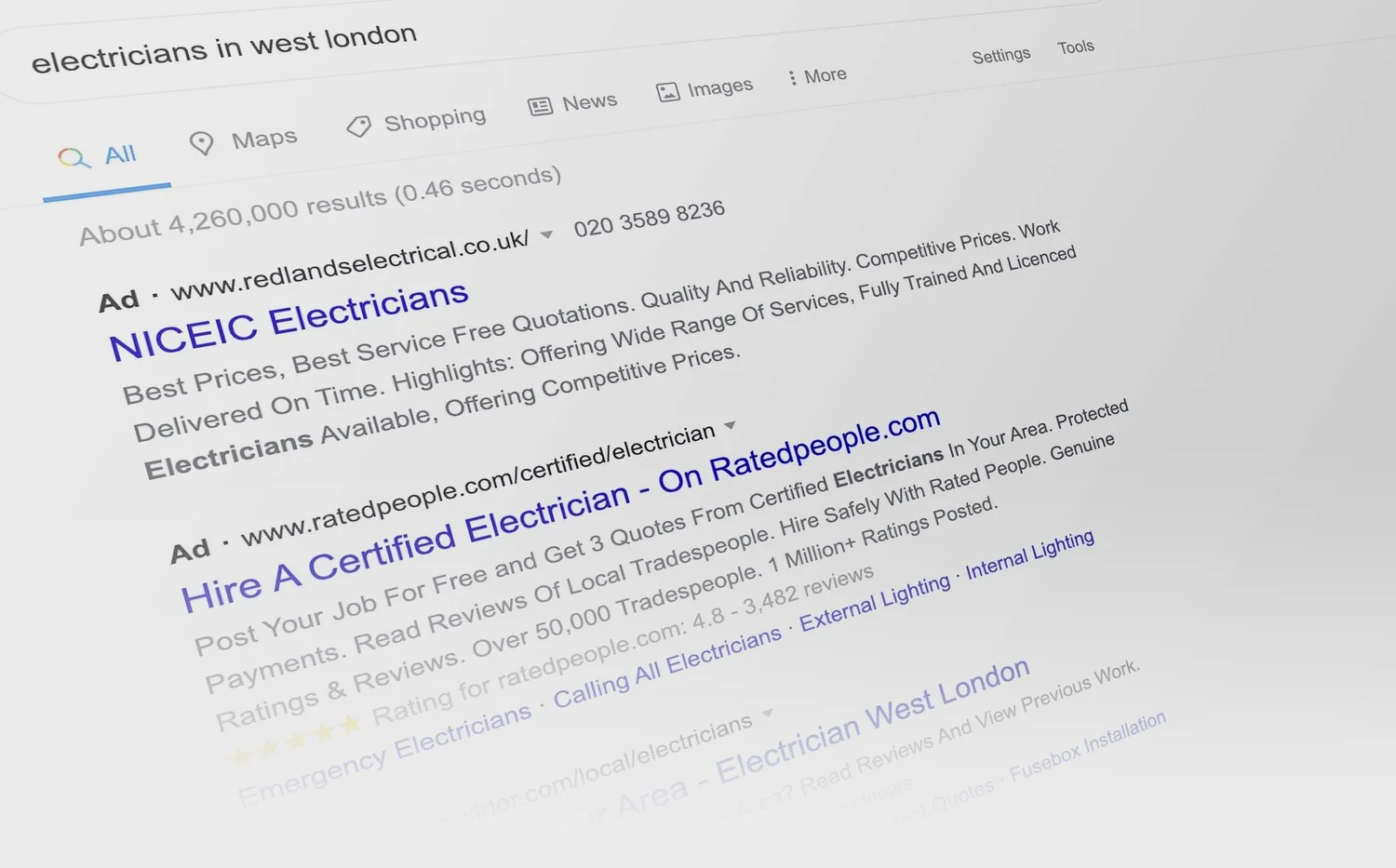
Although a Google Ads agency is an additional charge on top of your ad spend, good management pays for itself: optimised campaigns drive more revenue from less budget than trial and error ever will.
What Are Google Ads?
Google Ads are adverts that appear when a customer searches on Google: text ads on the results page, image ads in the shopping tab, and ads pinned in Maps and the local pack. For a local business, that last kind matters enormously.
Are Google Ads The Same As PPC?
PPC (pay per click) is the term for online marketing where you pay only when someone clicks your advert. Google Ads is a type of PPC, and for most local businesses it’s the most important one, because it captures people at the exact moment they search for what you do.
What Is Google Ads Management?
Everything from setting your campaigns and ads up, to managing them day to day, to troubleshooting issues. Your account is split into campaigns and ad groups containing the ads themselves; this structure keeps things organised and gives you control as your strategy grows.
Why Use An Agency?
Run a campaign on your own and you’ll probably see some return using basic trial and error. But there are a lot of moving parts, and each one can quietly cost you money when it goes wrong. Would you know what to do if an ad that was performing well suddenly started spending heavily and driving no customers?
Good management means the right keywords and, just as importantly, the right negative keywords; ads written for buying intent; bids managed to your capacity; and conversion tracking wired to calls, forms and bookings so you know exactly what your spend earns.
So, Are They Necessary?
Honest answer: not always. If you dominate the map pack and your organic visibility covers your capacity, ads may be a top-up rather than a necessity. But while local SEO compounds, ads are the fastest way to be visible today, and the two together reinforce each other. We’ll tell you which mix fits your business on a discovery call.
Why Local Ad Accounts Waste Money
Nearly every underperforming local account fails in the same three places, and none of them are exotic.
Match types that are too loose. Broad match will happily spend your budget on searches that share a theme with your service but no intent to buy it. For a local business with a modest budget, that is the fastest way to spend a month's money on people researching how to do the job themselves.
Geography set to the wrong thing. Location targeting defaults are more generous than most advertisers realise, and can include people merely showing interest in your area rather than being in it. For a business that needs someone to physically arrive, that distinction is the whole ballgame.
Everything landing on the homepage. Someone who searched for one specific service and arrives on a general homepage has to find their way, and most will not. The click is already paid for at that point, which makes it the most expensive kind of mistake.
Negative Keywords Are The Actual Work
The list of searches you refuse to pay for matters more than the list you bid on. Every local account needs a growing negative list covering the obvious categories: 'free', 'DIY', 'how to', 'jobs', 'courses', 'salary', plus competitor names you do not want to pay to appear against and, critically, place names outside your area that keep creeping in.
This is not a set-up task, it is a weekly habit. New search terms appear constantly, and an account nobody has pruned in six months is quietly funding a lot of irrelevant clicks.
Measure The Phone Call, Not The Click
Most local businesses take enquiries by phone, and an account that only measures form fills is measuring the minority of its own results. Call tracking, call extensions and conversion tracking that counts a genuine call are the difference between knowing your cost per lead and guessing at it.
Once calls are tracked properly, the picture usually changes. Campaigns that looked poor on form fills often turn out to be the ones producing the phone ringing, and budget can move to where the work actually comes from.
What To Run First On A Small Budget
If the budget is tight, concentrate rather than spread. A single tightly matched campaign on your highest-value service, restricted to the postcodes you most want to work in, running during the hours someone can actually answer the phone, will out-earn a broad account covering everything you do. Expand once it is profitable, not before.